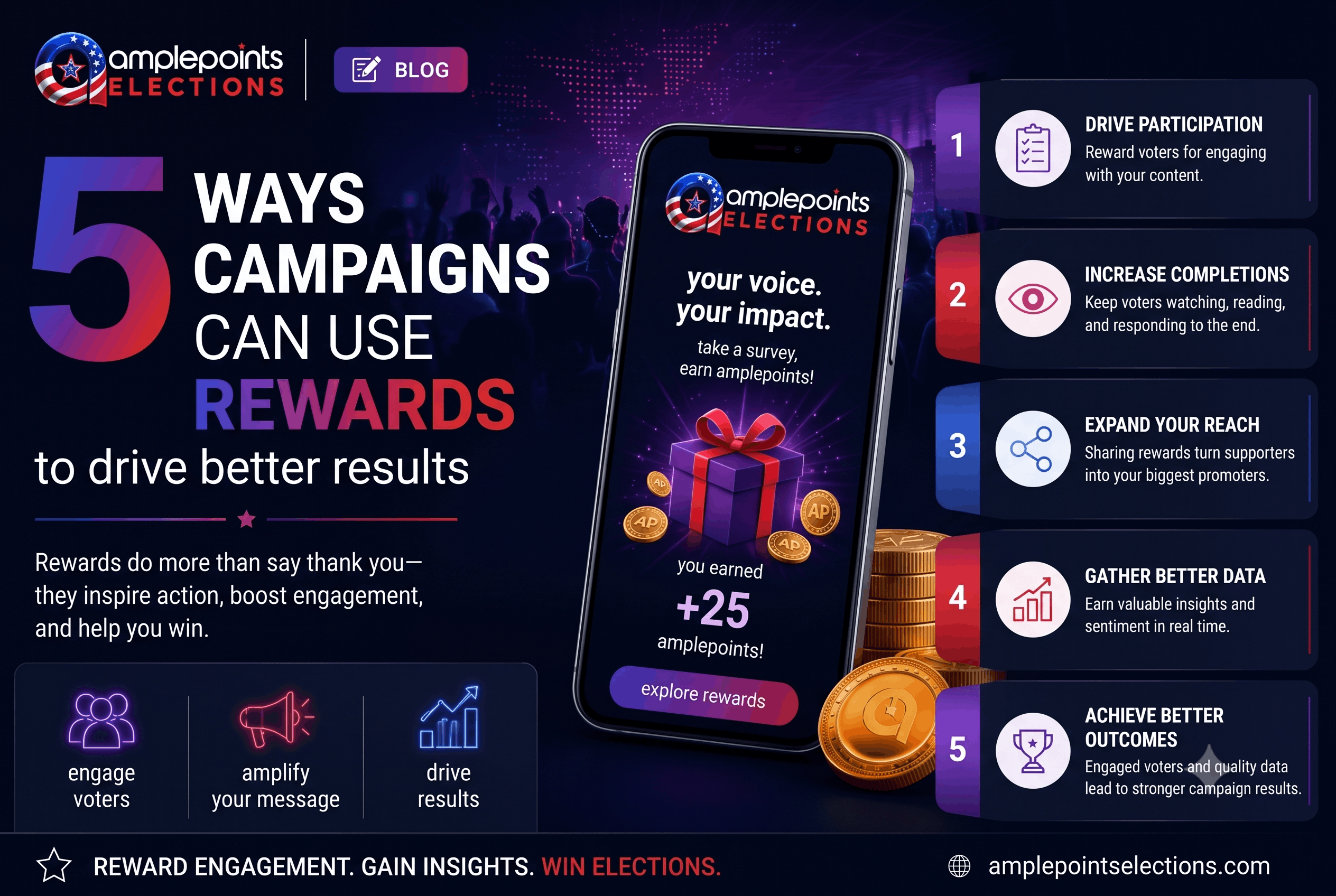
1. Increase completion of campaign surveys
Long surveys often lose participants before the final question. A clearly stated reward can give people a reason to complete the full experience. Campaigns receive more complete response sets and can compare answers across geography, demographics, or audience segments.
2. Improve video attention
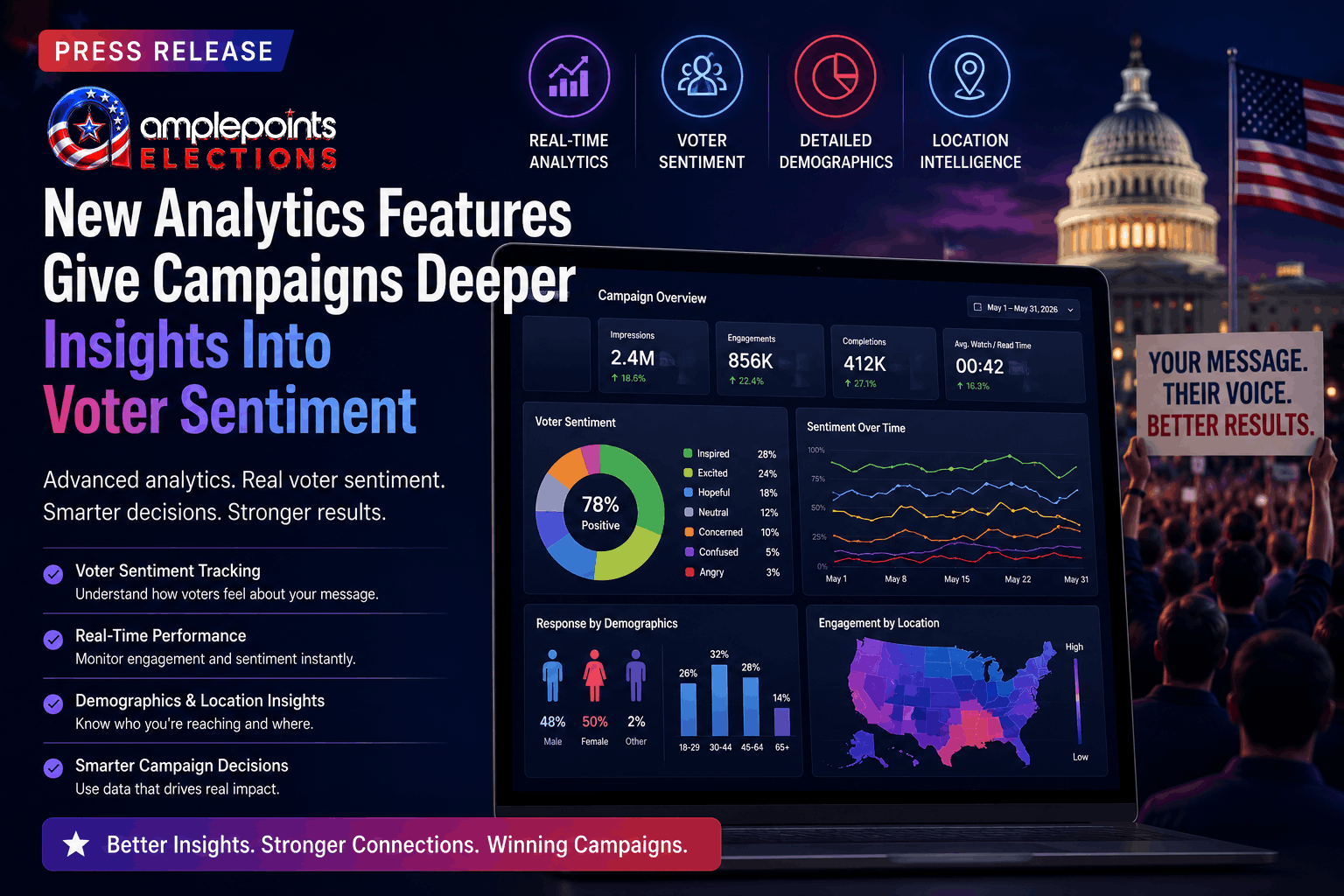
A campaign video may be delivered but never watched. A rewarded video experience can require the participant to watch the full content and respond within a defined period. Campaigns gain completion data, average watch time, sentiment, and follow-up answers.
3. Gather quick feedback through polls
Short polls are useful for testing issue priorities, message reactions, event topics, or community concerns. A simple reward can increase participation while keeping the experience fast and easy.
4. Extend reach with optional sharing
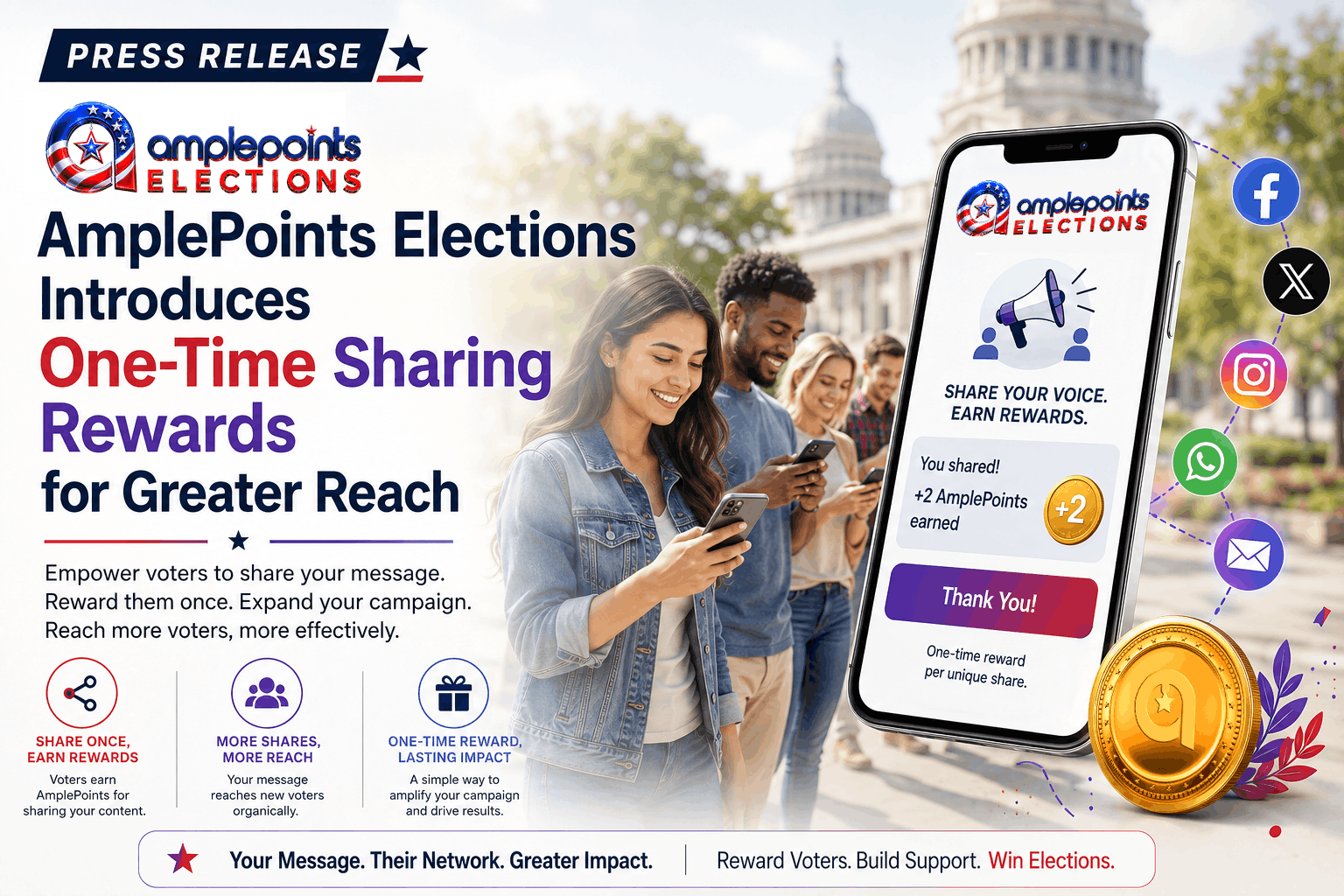
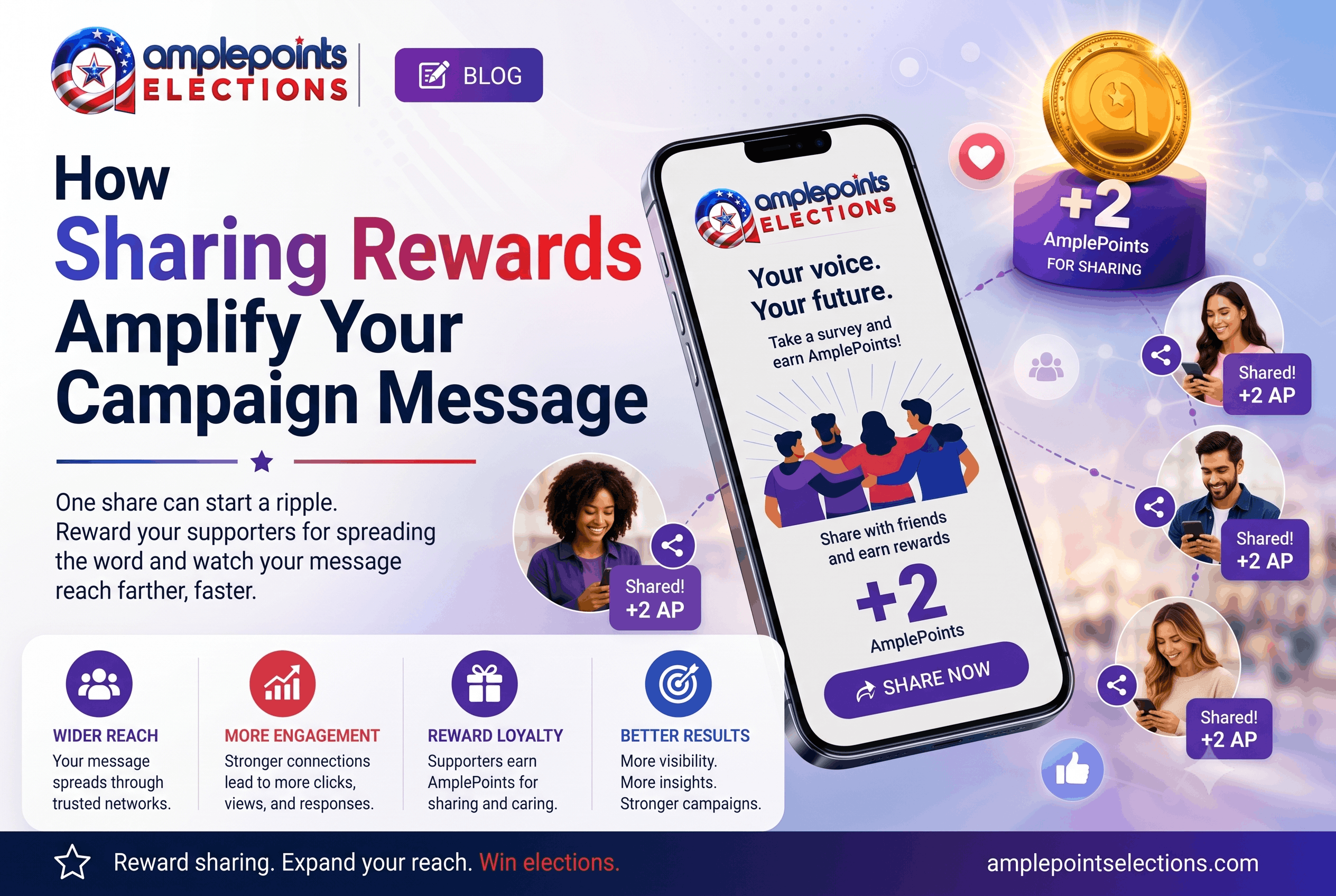
After completing an eligible experience, participants may be invited to share the link and earn a one-time reward. Campaigns can measure the number of shares, new visitors, and completed experiences generated through sharing.
5. Re-engage completed participants
A participant who completed one experience may be invited to a future survey, poll, video, or information update. Re-engagement allows campaigns to build an ongoing feedback cycle rather than treating every communication as a one-time contact.
Use rewards with purpose
The reward should support a clear action and a clear campaign objective. Campaigns should define what completion means, what information will be collected, how much the experience will cost, and how the results will influence future outreach.
Rewarded engagement is most effective when it is transparent, easy to understand, and connected to useful campaign content. The goal is not simply to generate clicks. It is to create completed experiences that provide value to both the participant and the campaign.