In today’s noisy media environment, campaigns compete for attention across text messages, emails, direct mail, television, connected TV, podcasts, digital ads, websites, and social platforms. Reaching a voter is possible. Getting that voter to stop, engage, and respond is much harder.
The engagement gap
Most political communication is still one-directional. A campaign sends a message and hopes the recipient watches, reads, remembers, and takes action. But crowded inboxes, short attention spans, and constant notifications make that increasingly difficult.
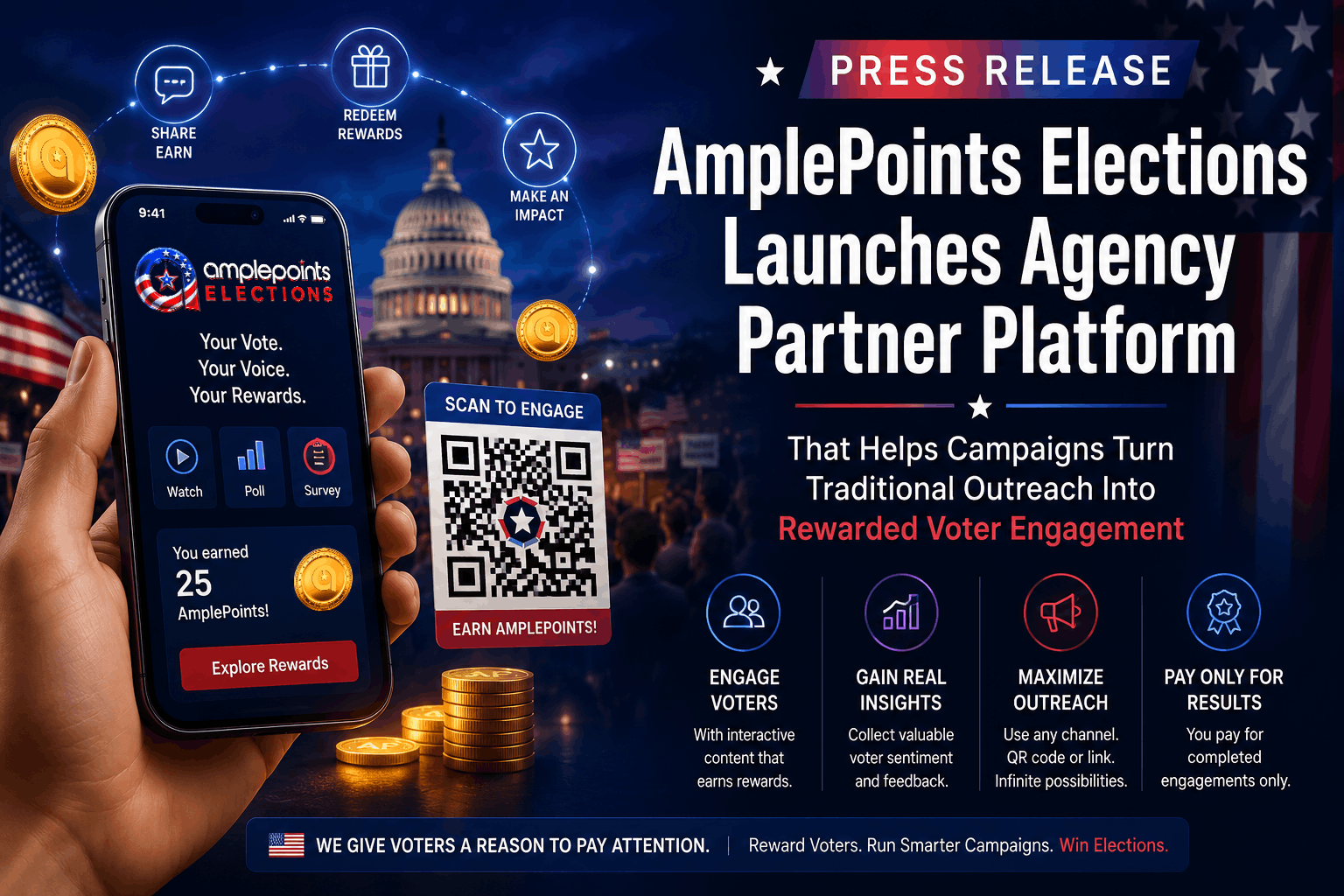
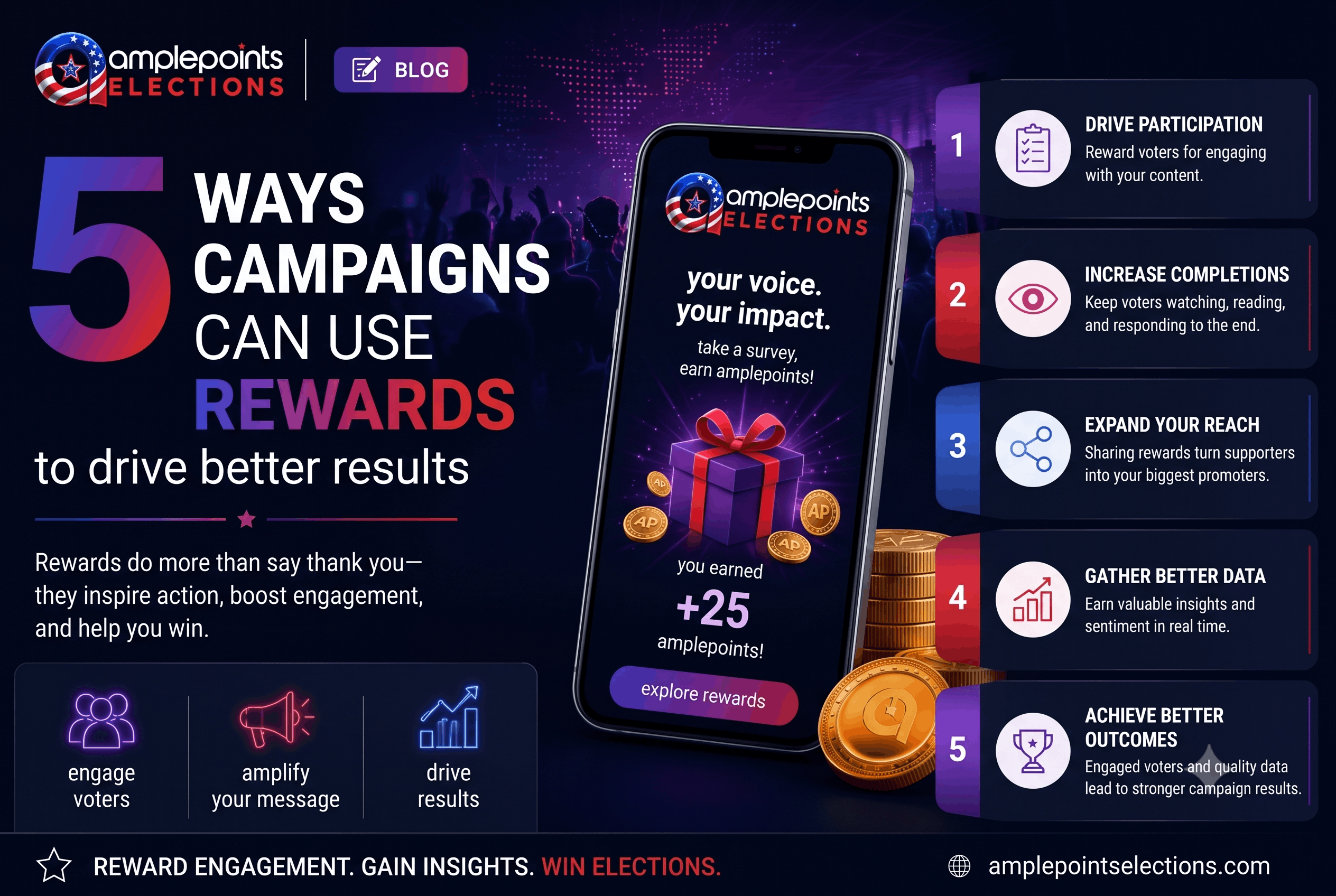
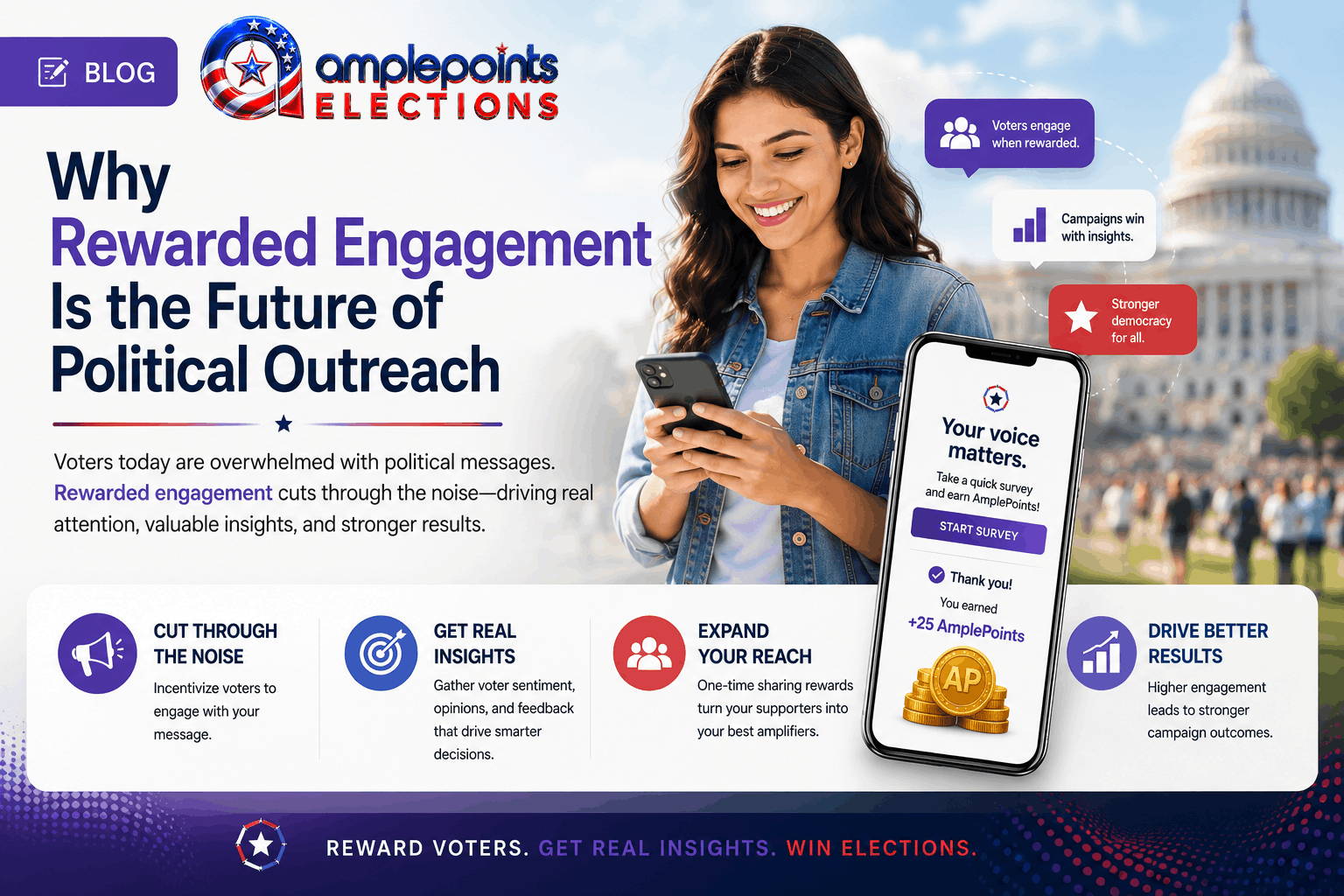
Rewarded engagement changes the exchange. Instead of only asking for attention, a campaign offers something of value for completing a defined experience. A voter may watch a full video, answer a poll, complete a survey, or review campaign information and then receive AmplePoints for finishing the required steps.
The engagement gap
A clear reward gives people a reason to begin. A structured completion flow gives them a reason to stay. A required response gives the campaign useful information rather than another unmeasured impression.
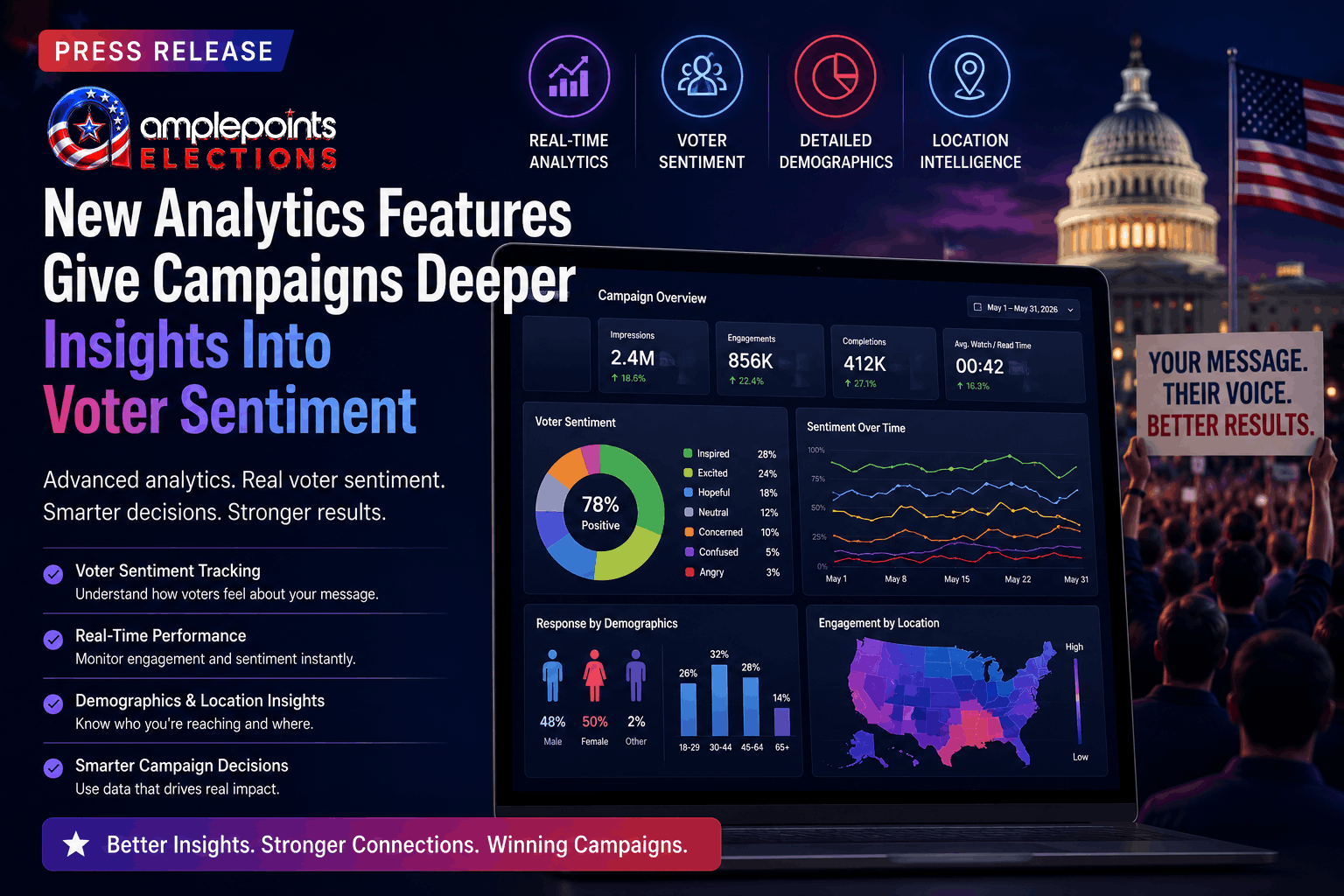
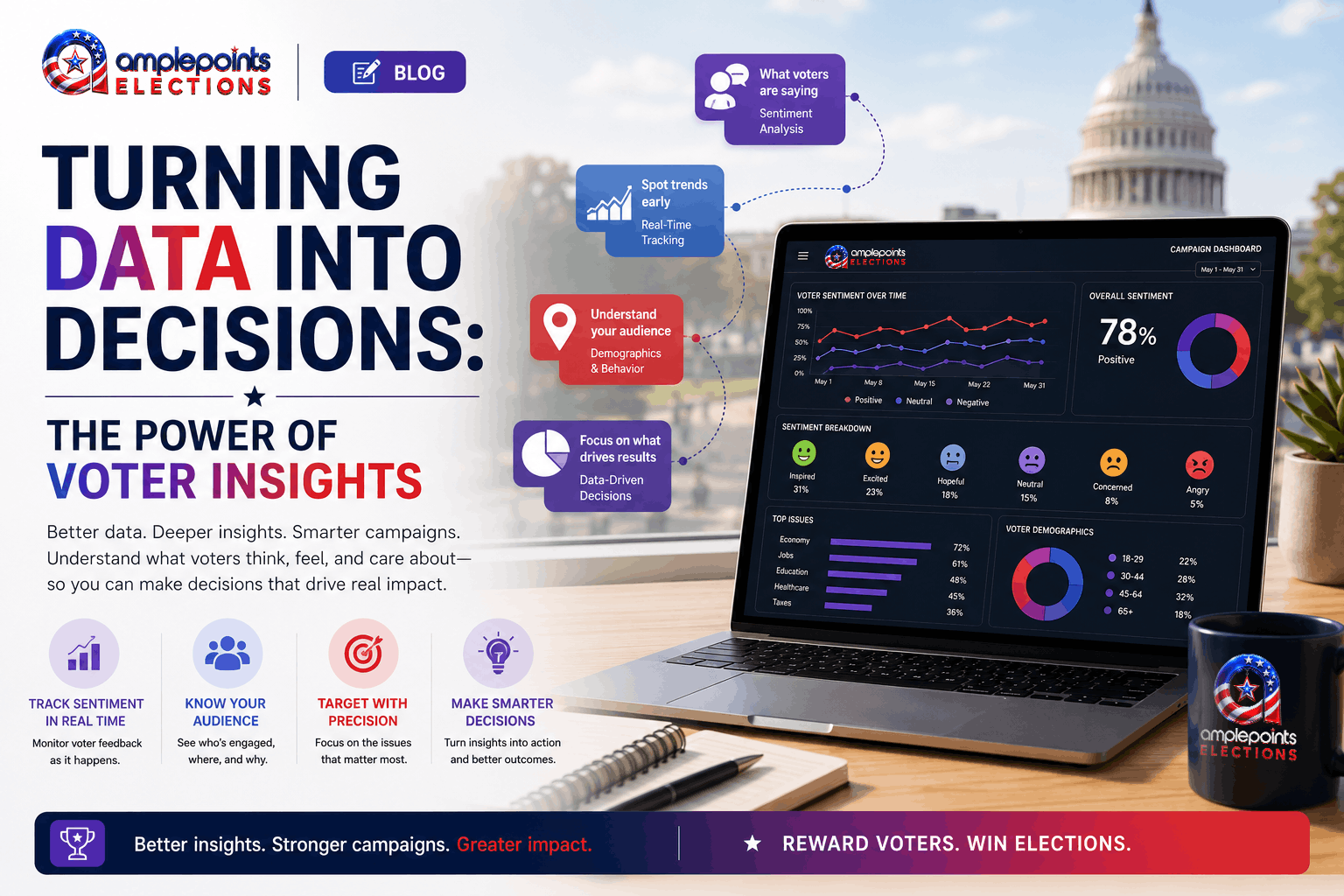
For campaigns, the result is not simply more activity. It is measurable activity: starts, completions, average viewing or reading time, survey answers, poll results, location data, device information, and voter sentiment.
Why it works
A clear reward gives people a reason to begin. A structured completion flow gives them a reason to stay. A required response gives the campaign useful information rather than another unmeasured impression.
For campaigns, the result is not simply more activity. It is measurable activity: starts, completions, average viewing or reading time, survey answers, poll results, location data, device information, and voter sentiment.
A better use of existing outreach
Rewarded engagement does not require campaigns to abandon the channels they already use. A rewarded QR code or link can be placed inside a text message, email, website, digital advertisement, direct mail piece, television spot, podcast, social post, door hanger, or event sign.
That means agencies can add an engagement layer to media that is already planned and purchased. The campaign message remains the campaign’s message. AmplePoints Elections provides the experience, reward, analytics, and follow-up tools around it.
What voters can do
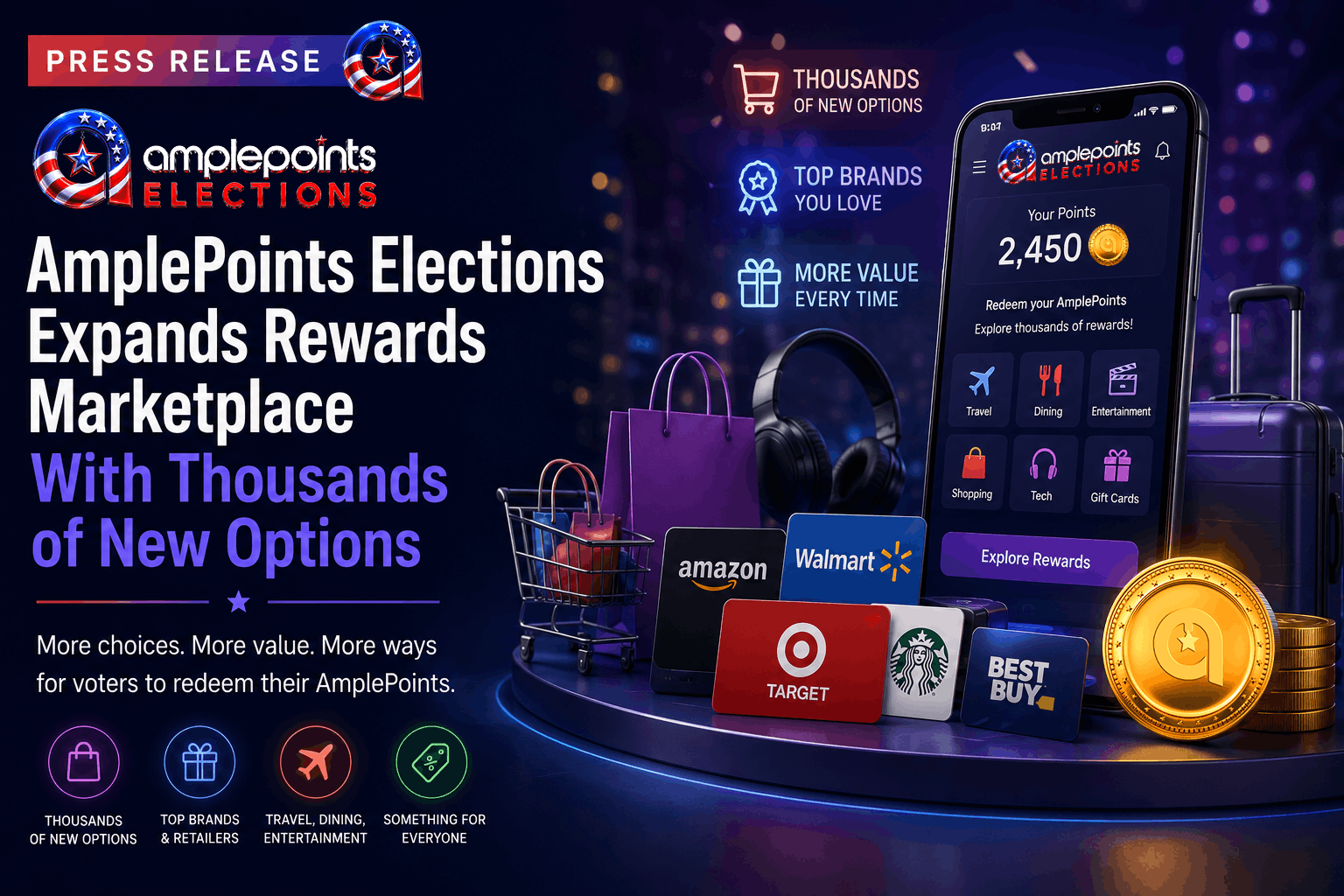
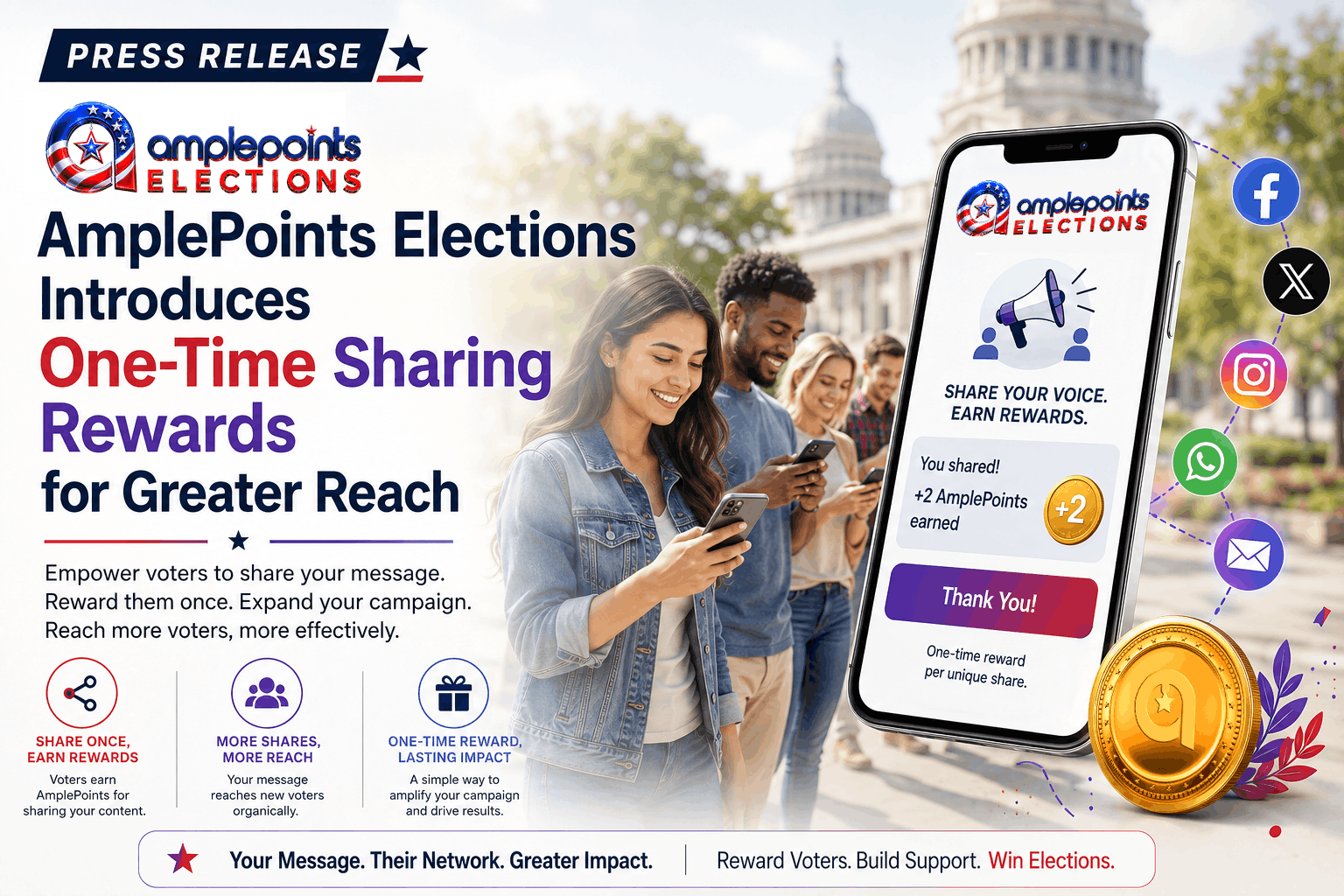
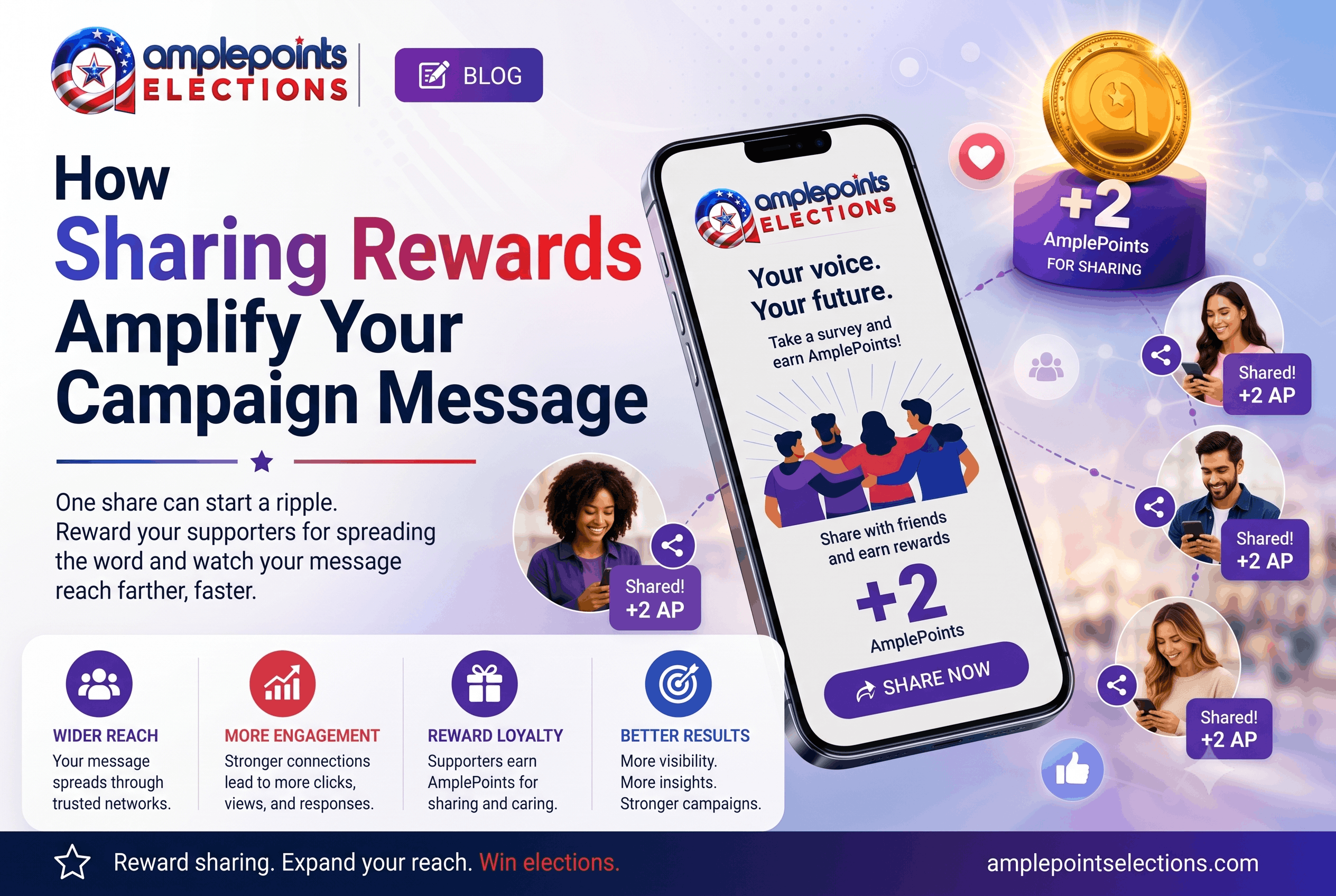
Depending on the experience, voters can watch videos, answer polls, complete surveys, learn about candidates or issues, share an eligible experience one time, and redeem earned points through the AmplePoints Marketplace.
The future is interactive
Voters increasingly expect digital experiences to be convenient, personalized, and responsive. Political outreach should not be an exception. Campaigns that provide a simple reason to participate can create better attention, better feedback, and better information for future decisions.
Rewarded engagement is not about paying people to vote or support a candidate. It is about recognizing the time people spend completing an informational or feedback experience. That distinction matters—and it creates a practical path for campaigns that want outreach to be more measurable and useful.